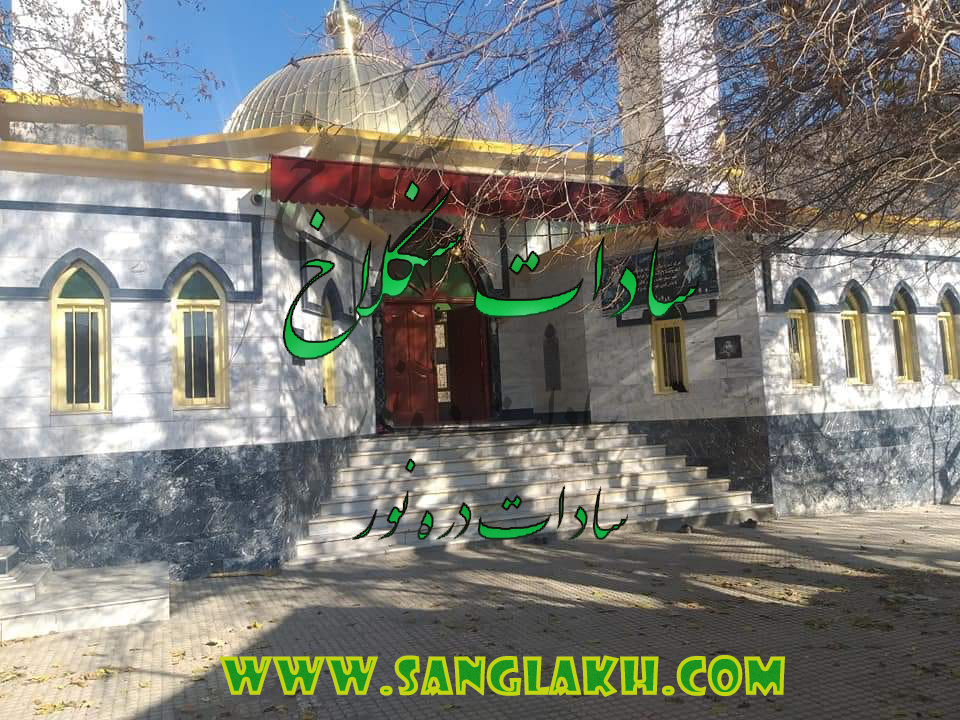
بسم الله الرحمن الرحیم
Seyyed Shah Qobad Wali, one of the great scholars (Ulama) of the Shi’a world and Islam, was the son of Shah Aal Ali, who was known as “Shah Alaykah” (Shah عَلَیکه). He was born in the tenth or eleventh century AH (Islamic calendar) in the Sanglakh Valley.
The lineage of Seyyed Shah Qobad, after three generations, reaches Seyyed Nezamuddin—known as Seyyed Shah Baba—whose shrine is a pilgrimage site in Bagh-e Langag-e Takanah. After eight generations, the lineage reaches Karbala’i Seyyed Ahmad, known as “Shah-e Berahneh” (The Naked King) in Yakawlang, Bamyan.
As recorded in the book Kashf al-Ansab by the late Hajj Mohammad Ali Shah Hosseini Nasab-e Sanglakhi in 1314 AH, Shah Qobad was a learned, jurist (Faqih), devout (Abed), and pious figure. Throughout his life and after his death, people of various ethnicities and sects witnessed many miracles (Karamat) and extraordinary deeds (Kharq-e Adat) from this divine scholar (Alem-e Rabbani) and highly esteemed Seyyed.
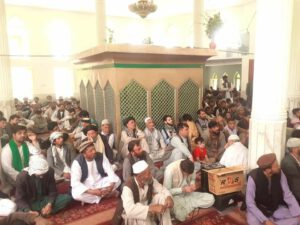
The mausoleum of Seyyed Shah Qobad, known as the “Ziyarat-e Shah Qobad Wali,” has been a pilgrimage site for common and notable people for centuries. By the permission of God, it is a source of healing for the afflicted and assistance for the needy who seek help from God through the honor of this revered Seyyed and high-ranking jurist.
According to an oral narration, Seyyed Ahmad, the son of Shah Nezamuddin (Shah Seyyed Baba) and the paternal ancestor of Seyyed Shah Qobad, migrated to Sanglakh after his father was martyred and his lands were usurped by the Durrani and Kharoti tribes.
Shah Qobad’s father sent him in his youth, via a Shi’a merchant, to Iran and from there to Najaf Ashraf to pursue religious studies and spiritual purification (Tazkiyya-ye Nafs) in the seminary (Hawza Ilmiyya). After years of study, Shah Qobad attained the high rank of jurisprudence (Faqahat) and independent reasoning (Ijtihad) and made significant strides in the field of gnosis (Irfan) and ethics.
Shah Qobad returned to Sanglakh after completing his studies in Najaf. This coincided with the rule of the Safavids in Iran and the Mughals (Baburis) in India. Modern-day Afghanistan was divided between these two regional powers. 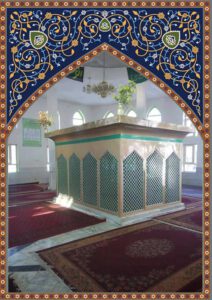
When Shah Qobad returned from Najaf, people in the region—which today includes the provinces of Kabul, Maidan, Parwan, and Bamyan—knew little about the Shi’a faith beyond its name and a series of rituals mixed with superstitions, due to the lack of religious educational centers and prominent scholars.
Seyyed Shah Qobad undertook several important and fundamental tasks, which included:
Propagation and Education: Promoting and teaching the religion and the school of thought of the Ahl al-Bayt (A.S.) by training scholars and dispatching preachers (Muballigh) to various Shi’a-inhabited areas.
Compilation of a Practical Treatise (Risalah Amaliyyah): Drafting a practical treatise to resolve the people’s religious, ritual, social, and legal problems. The Risalah Amaliyyah of Seyyed Shah Qobad was reportedly seen and used by the late Karbala’i Mullah Seyyed Ahmad Ali Shah, who passed away in 1332 AH in the “Siyah Paitab” area. It is probable that this treatise was among the books of the late Hajj Mohammad Ali Shah Hosseini Nasab, which were unfortunately destroyed by his children and grandchildren after the communist coup of Haft-e Sawr (April 1978). It can be said that Seyyed Shah Qobad was the first jurist (Faqih) and Mujtahid to write a treatise in Afghanistan, which regrettably was never printed and was lost over time.
Development of Sanglakh: Developing Sanglakh for his children, followers, and supporters. In addition to teaching, propagating, and providing religious education to the people, Seyyed Shah Qobad also strived to develop Sanglakh and establish agricultural lands and gardens. For instance, the excavation and enlargement of the Khwaja Mubarak Spring in Darreh Hisar—one of the tributary valleys of Sanglakh—which increased the water flow of the valley’s river, is counted among his services.
Gaining the Affection of Sunnis: Attracting the affection of Sunnis, especially the inhabitants of the Maidan Valley, through his commendable ethics and valuable miracles. It is a testament to his greatness that the people of Maidan, particularly the Pashtuns, still hold the Seyyeds of Sanglakh in high respect